 (0113) 204 9682

Making Sense of RNG Certification

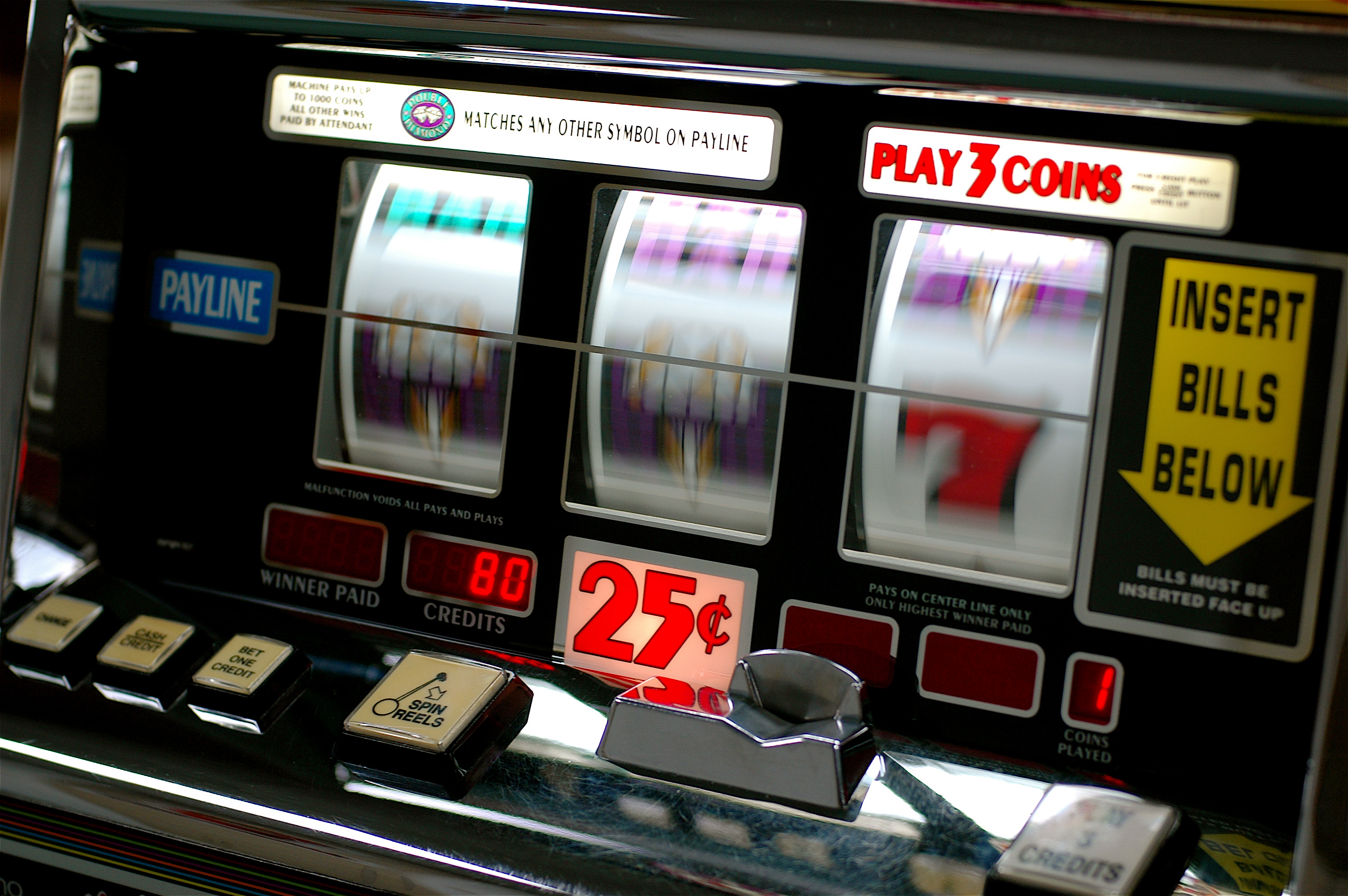
Each round of an online slot and every card handed out in a digital blackjack game relies on a unseen piece of code that most players never see. That code is the Random Number Generator, or RNG, the algorithm that decides each outcome. Australian players who wager on offshore platforms often encounter no local regulator monitoring the game, so the question of fairness matters more than it might in a fully regulated domestic market. RNG certification turns a mathematical promise into a documented guarantee. Independent laboratories test, validate, and track these systems to ensure that the results are genuinely unpredictable. For a brand like Winspirit Casino, a current RNG certificate is not a checklist exercise. It is a basic requirement for operating legally and a solid trust signal for players and affiliate partners who require to show that the games they promote rest on integrity.
Winspirit Casino’s Pledge to Verified Fairness
Winspirit Casino runs on the understanding that technical trust is the main foundation of the digital gaming economy. The platform features games from multiple leading suppliers, each of which employs RNG systems that have been impartially certified by accredited international testing laboratories. The casino’s legal and affiliates page acts as a transparency hub where current certifications and testing documentation are easy to find. This commitment is not a passive display. It represents an active part of the operator’s compliance framework. By placing its entire gaming suite through regular audits, Winspirit Casino ensures Australian players are engaging with a product that meets global standards for randomness and fairness. For affiliate partners, that operational philosophy offers a consistent and compelling message: the brand they represent is built on verifiable integrity, not just marketing promises.
In what way RNG Certification Guards the User Experience
RNG certification extends beyond the theoretical idea of fairness. It directly influences the player experience by preserving the integrity of return-to-player percentages and game volatility. Each individual slot is crafted with a specific mathematical model that establishes the long-term payout ratio. If the RNG was skewed, that ratio might change sharply and players would lose faster than the design intended. Certification ensures the game functions precisely as the provider programmed it. It also stops the operator from adjusting on the fly the RTP based on player profiling, an unethical practice that certified systems prohibit. When a player triggers a bonus round or a jackpot, the certificate provides them with certainty that the win was a genuine random event, not a deliberate enticement triggered by the software. This technical integrity forms the cornerstone of a sustainable entertainment product.
The Foundation of Honest Digital Gaming
A Random Number Generator is a software algorithm built to produce number sequences with no pattern you can readily spot. In a brick-and-mortar casino, randomness shows up as shuffled cards or a spinning roulette wheel. Online, that physical process is replaced by cryptographic mathematics. A properly configured RNG creates thousands of numbers every second, and each number maps to an outcome such as a specific card or a reel position. The key split lies between pseudo-random and true random generation. Most online casinos use pseudo-random number generators. They start with a seed value and run it through a sophisticated formula. The process is technically deterministic, but the seed usually originates from an unpredictable physical source, so the final output behaves in a way that is statistically indistinguishable from true randomness. Without this digital backbone, every game would become expected and unfair.
Why Australian Players Should Care About RNG Certification
Australia follows a set of rules established under the Interactive Gambling Act 2001, which prohibits some online casino services to residents. As a result, many Australian players utilize platforms regulated under offshore jurisdictions. RNG certification then acts as the main independent assurance that a game is fair. With no local regulator overseeing the operator, a technical certificate from a respected lab closes the trust gap. It informs players that the house edge matches the published figure and that outcomes are not being tweaked to increase the operator’s margin beyond the stated return-to-player percentage. Anyone depositing real money should consider this as a non-negotiable requirement. A casino that keeps its RNG certification current is demonstrating that it prioritizes long-term player trust over short-term profit, which counts in a market where consumer protection is tied to operator transparency.
The Link Between Licensing Requirements
RNG certification usually stands as a mandatory condition in the licensing terms of reputable online gambling jurisdictions. A Curacao-licensed operator, for example, has to send its gaming systems for independent testing before a sub-license is granted. The master license holder and the regulatory authority often examine the certification documents. That legal obligation means a casino cannot just assert fairness. It has to demonstrate fairness through documented third-party verification. For affiliates promoting Winspirit Casino, the link between licensing and certification gives them a concrete compliance story. They can illustrate that the brand is not operating in a regulatory grey area and that it is governed by enforceable technical standards that shield the end user. That enhances the affiliate’s own promotional compliance.
FAQ
Just what is an RNG in online casino games?
An RNG, or Random Number Generator, is a software algorithm that produces a number sequence with no predictable pattern. In online casino games, each number maps to a game outcome, like a card being drawn or a reel stopping on a position. It replaces the physical randomness of a traditional casino with a mathematical system designed to make every result independent and statistically fair.
Why is independent RNG certification essential for Australian players?
Many online casinos serving Australia are licensed offshore, so there is no direct oversight from Australian authorities. Independent RNG certification from a respected lab bridges that gap by giving verifiable proof that games are fair and not manipulated. It gives players confidence that the advertised odds are accurate, even with no local regulatory body monitoring the operator.
Which bodies supply trusted RNG certification?
Several internationally recognised laboratories specialise in gaming certification. The best-known ones include iTech Labs, winspiritcasino privacy policy, eCOGRA, Gaming Laboratories International, and BMM Testlabs. These organisations are accredited to test against strict jurisdictional standards and are themselves regularly audited to maintain independence and technical competence in evaluating random number generators.
How often does an RNG need to be re-certified?
RNG accreditation is not everlasting. A full re-certification is typically required each time the RNG code changes or a minimum of once a year. Testing laboratories also regularly monitor live game data remotely on an ongoing basis to identify any statistical anomalies in real time. That continuous oversight keeps the certificate a valid and dependable indicator of game fairness.
Can a certified RNG still be manipulated by the casino operator?
A correctly certified RNG is unable to be rigged without detection. The certification procedure confirms that the operator has no method to modify RNG output based on player behaviour, bet size, or other parameters. The algorithm is locked and observed, and any interference would immediately cause the system to be unsuccessful at later audits, resulting in the certificate being revoked.
By what means does RNG certification aid casino affiliates?
Affiliates can utilize RNG certification as a strong trust-building tool in their marketing. It enables them market a casino based on demonstrable technical fairness in place of vague claims. curated list This factual approach attracts more particular players, boosts conversion quality, and supports affiliates comply with advertising regulations because all fairness claims are backed by independent evidence.
At what location can players find a casino’s RNG certificate?
Reputable online casinos usually display their RNG certification on a special legal, fairness, or security page, often accessible from the website footer. The certificate should contain the testing laboratory’s logo, a report reference number, and the date of the last audit. Players can also typically verify the certificate’s validity directly on the testing laboratory’s official website.
RNG Accreditation as an Affiliate Promoting Resource
For affiliate partners working with Australian users, RNG certification is a beneficial but commonly neglected asset. The market is filled with bonus promotions and eye-catching offers, so technical trust can set a brand apart and improve conversion quality. Partners who inform their readers what RNG certification entails are building a bond on honesty rather than hype. They can cite detailed testing reports, clarify the testing standards, and present the casino choice as a reasoned move rather than a gamble itself. That approach attracts players who are more likely to stay loyal and offer greater overall value because they have faith in the site. For Winspirit Casino partners, the company’s verification status supplies factual, provable material that meets advertising guidelines by concentrating on demonstrable fairness instead of unsubstantiated prize promises.
Establishing Credibility with Knowledgeable Followers
Aussie online casino players are becoming more savvy and more sceptical of aggressive marketing. Many have experienced platforms where games appeared inconsistent or withdrawals caused problems. An affiliate who can clarify what RNG certification entails and connect it to the operator’s legal page right away gains authority. The conversation transitions from “trust me” to “here is the independent evidence.” Affiliates can create comparison content that scores casinos by certification transparency, the credibility of the testing laboratory, and how often audits take place. This data-driven approach suits the modern consumer’s inclination for informed decisions. It also minimizes the affiliate’s dependence on emotional triggers, which makes the content more sustainable and less likely to get flagged by advertising platforms for misleading claims.
Compliance and Responsible Promotion
Highlighting RNG certification also gives affiliates a more secure path in a challenging advertising environment. Australian consumer law forbids misleading or deceptive conduct, and gambling ads encounter heavy scrutiny. If an affiliate concentrates content on the technical fairness measures a casino uses, they can produce strong, defensible claims. A statement like “our recommended casino uses an eCOGRA-certified RNG” is factual and verifiable. That safeguards the affiliate from accusations of making false promises about winnings. It also matches responsible gambling messaging because it highlights that games are games of chance with mathematically provable outcomes. Winspirit Casino’s affiliate programme can furnish partners with the exact certification details and laboratory badges to use in their content, so promotions stay accurate and compliant.
The Testing Process: A Comprehensive Review
Getting from a raw algorithm to a certified RNG involves a thorough series of checks that can extend over several weeks. Understanding this process strips some of the mystery from the certification seal and shows why it carries weight. The testing laboratory commences by receiving the complete source code and technical documentation from the game developer or platform provider. Engineers perform a static analysis of the code to comprehend the architecture and detect potential vulnerabilities. They then assemble and launch the software in a monitored environment, providing it with millions of seed values and collecting the output sequences. Those sequences undergo a battery of statistical tests. The process is thorough, but that depth is what guarantees no subtle bias passes through unnoticed.
- Program Inspection: The lab examines the RNG algorithm and its implementation line by line. The goal is to confirm that the code matches the documented design and contains no hidden functions that could change the output based on outside variables.
- Seed Verification: The tester checks how the initial seed is generated. It must come from a genuinely unpredictable physical process, such as thermal noise or radioactive decay timings, or from a cryptographically secure mix of system events.
- Statistical Testing: The lab produces billions of random numbers and runs them through standardised test suites. These include frequency tests, poker tests, and autocorrelation tests to confirm that the numbers are uniformly distributed and independent.
- Integration Testing: The RNG is tested inside the actual game client. The laboratory simulates millions of game rounds to ensure that the mapping from random numbers to game outcomes produces the correct theoretical return to player and that all possible outcomes occur at the expected frequency.
- Security Assessment: Engineers attempt to forecast future outputs from previous results. A certified RNG must be computationally infeasible to predict, so no player or operator can gain an unfair advantage.
Regular Audits and Re-Certification
RNG certification isn’t a permanent status. Online gaming continues to evolve, with game updates, server migrations, and new software releases coming all the time. To hold a valid certificate, the operator needs to submit to periodic re-audits. Many labs demand a fresh evaluation whenever the RNG code is altered or at least once a year. Labs also often implement remote monitoring tools that collect live production data from the casino’s servers on a regular schedule. Those tools perform real-time statistical checks to detect any deviation from expected randomness. This continuous oversight ensures a certificate shown on Winspirit Casino’s legal page represents a living document based on current data. For affiliates, that ongoing commitment serves as a strong story point. It shows the brand’s dedication to fairness is far from a one-off marketing claim but a consistent operational standard.
What RNG Certification Really Signifies
RNG certification is a official declaration that a gaming system’s random number generator has been comprehensively examined and meets internationally recognised standards for statistical randomness and non-predictability. It is not a label awarded merely once. Certification is a structured methodology carried out by accredited testing facilities. It verifies that the RNG produces outcomes that are consistently distributed, non-repeatable, and free from bias across millions of simulated game rounds. For an Australian player, that means the odds shown in a game’s paytable are the odds truly being provided. The certificate itself is a detailed report covering the algorithm’s design, the seed generation method, and the way it is implemented on the game server. A casino that displays a valid RNG certificate is presenting confirmed confirmation that its games cannot be altered by the operator or by players. That is what builds equal opportunities.
The Role of Independent Testing Laboratories
No casino can self-certify its own RNG and yet anticipate anyone to accept the result. The complete structure rests on accredited third-party laboratories that operate with complete operational and financial separation from the gambling operators they examine. iTech Labs, eCOGRA, Gaming Laboratories International, and BMM Testlabs are among the globally renowned entities that carry out these evaluations. Their engineers analyze game code, examine the mathematical algorithms, and run billions of simulated game rounds to detect any statistical deviation. They also ensure that the RNG cannot be affected by outside variables such as bet size, player history, or time of day. Once the lab is confident, it provides a compliance certificate and usually keeps monitoring the operator. For Winspirit Casino, collaborating with these labs means every game on the platform must adhere to the same strict benchmark, which also reinforces its legal standing.
Core Requirements and Compliance Frameworks
Verification does not use a vague set of criteria. It adheres to rigorous technical requirements. The most commonly cited standard is the one cbc.ca regulators establish for online gaming in regions such as Malta, the United Kingdom, and Curacao. Those standards mandate an RNG to pass statistical tests like the chi-squared test, the runs test, and the serial correlation test at a 99% confidence level. The source of entropy employed to seed the generator also must be verifiably non-deterministic. Labs often combine hardware noise with user input timings for this. Compliance standards further demand that the RNG state cannot be reconstructed by deconstructing game outputs. For a platform designed for Australian players, complying with these international guidelines makes up for the shortage of a domestic online casino licensing system. It offers a parallel level of player safeguarding through technical validation.